Your cart is empty
Tax included and shipping calculated at checkout

Drawer menu
Tax included and shipping calculated at checkout

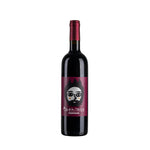
Pugnitello is a native Tuscan grape variety whose origins remain partly shrouded in mystery. Its presence has been documented for centuries in the hills of Alta Maremma, Chianti, and the provinces of Siena andGrosseto, and its name derives from its small, compact grape bunches that resemble a "fist" ("pugno"). The compactness of its grape bunch, which can sometimes lead to mold growth and the low yield per hectare, led to its abandonment in the past.
Its rebirth began in the 1980s, when Dr. Bandinelli discovered some surviving vines on Mount Amiata, and made a decisive contribution to its preservation.
In the years that followed, genetic studies and agronomic experiments led to its gradual reintroduction into cultivation. Of fundamental importance to this process was the work of Agricola San Felice nearSiena.
The Vitiarium/Coltivatori Custodi project was founded with the goal of recovering rare native grape varieties, preserving biodiversity,and restoring the dignity of historic varieties. Sequerciani, as a Custodian Cultivator since 2018, is also a part of this visionary work.

When Ruedi Gerber decided to plant a vineyard in 2009, he had no doubts: Pugnitello was the first grape variety he selected. A conscious choice, as an expression of the terroir of Maremma, and a symbol of biodiversity in harmony with regenerative and biodynamic agriculture.
This compact bunched grape, susceptible to powdery mildew in rainy years, finds its ideal balance in the clay, chalky, mineral-rich hillside soils of Sequerciani, where location, good ventilation, and an ideal temperature range prevent mold and favor phenolic concentration and ripening.
This wine is made from single-varietal Pugnitello grapes that arespontaneously pre-fermented with plant-specific yeasts and maceratedin cement tanks for 18-20 days. Aging in terracotta amphorae iscombined with aging in French oak barrels and lasts about two years.After bottling, the wine rests for another year in glass bottles.
There it presents itself with an intense ruby red color. The tannins arepowerful yet refined. On the nose, it offers notes of forest berries,plum, and spicy nuances. On the palate, it is structured andharmonious, with a freshness that supports and balances its fullness.
It's a wine that expresses its terroir with elegance and determination. Itpairs perfectly with strong-flavored dishes, slow-cooked meats, agedpecorino cheeses, and spicy foods. A wine to be enjoyed to its fulleston the tongue.
Our agricultural work thus becomes culture.